


The Construction Counsel is a collection of articles on construction contract provisions, risk allocation, and project documentation written for contractors, subcontractors, developers, and suppliers. Each piece addresses a specific issue that comes up regularly in contract negotiations and project administration, explained in practical terms rather than legal abstractions.
Topics are drawn from patterns across real contract reviews and client conversations. The goal is to give project teams and business owners enough context to recognize risk in their agreements, ask better questions before signing, and understand how common provisions operate when things do not go as planned.
For deeper reference material organized by topic, see the Construction Field Guide.

A Plain-English Guide to Data Centers in Kentucky
Data centers are the railroads and interstates of this century. They are being built somewhere, with or without us. But a county fiscal court in Kentucky cannot be expected to negotiate with the Amazons or the Metas on equal terms, which is why state government has to set the rules. Nate Simon, a Lexington construction lawyer, walks through what is true, what is not, and what to ask before your county votes.
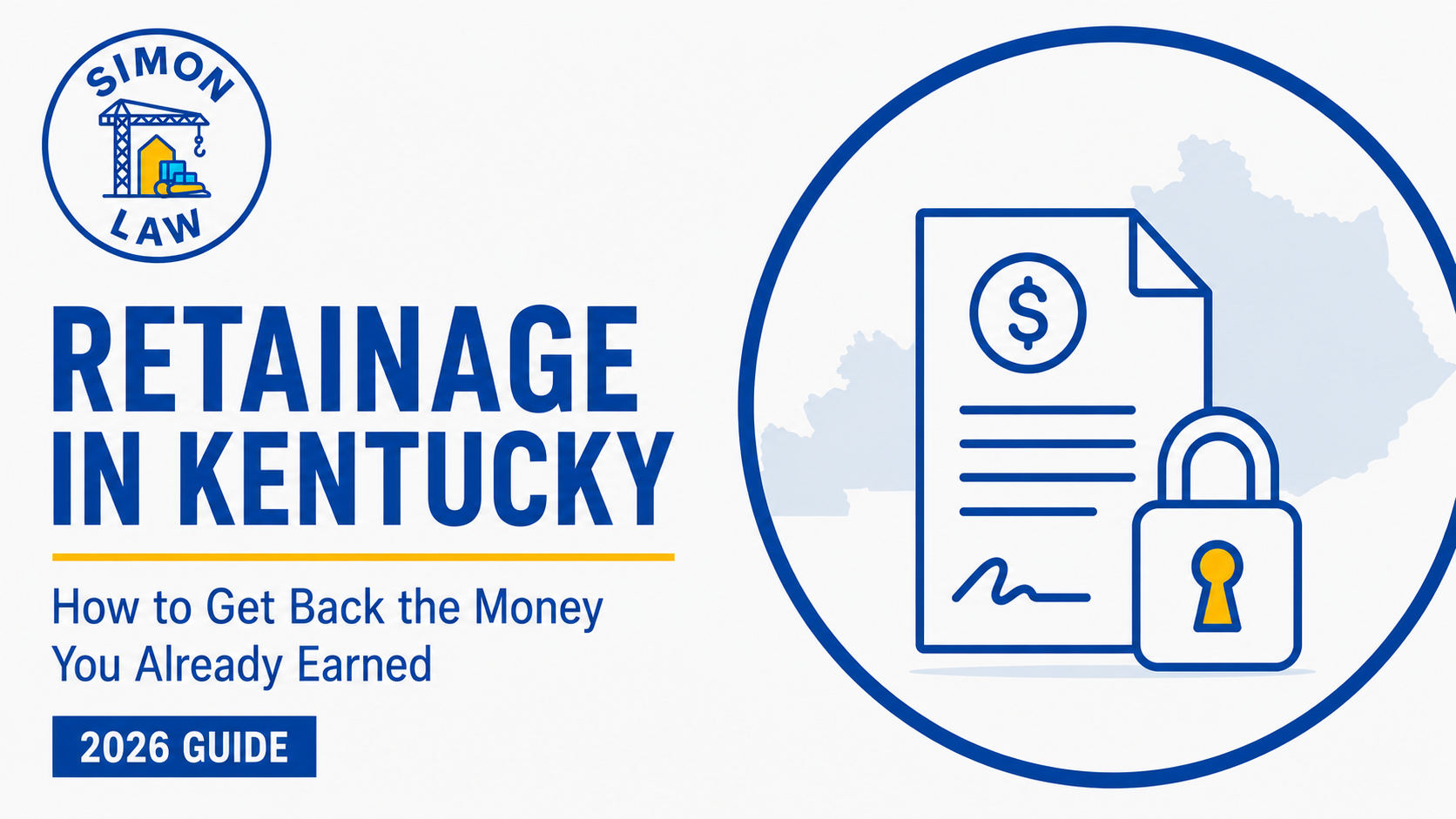
Retainage in Kentucky: How to Get Back the Money You Already Earned
Your crew finished eight months ago. The owner has been operating the building since spring. So why is five percent of your contract still sitting in someone else's bank account?
That is retainage. On a four percent margin job, it is not just deferred profit. It is you financing the owner's project, interest free.
The newest Construction Counsel article covers what Kentucky law actually gives contractors here, including a 2025 change many owners have not caught up with:
Retainage is capped at 10 percent of each undisputed payment until the project is 50 percent complete, and at 5 percent of the total contract amount after that
It must be released within 30 days after substantial completion, subject to a limited holdback for uncompleted work
Unreleased retainage accrues interest at 12 percent, and bad faith withholding risks paying the other side's attorney fees
Since June 27, 2025, retainage on private contracts of $2 million or more must be escrowed, the escrowed funds belong to the contractor, and contract clauses waiving escrow are void
The legal rights only matter if your back office treats retainage like the receivable it is. The article covers both halves: what to negotiate before you sign, and how to bill, close out, and collect after substantial completion.

The $14 Million Paragraph: Why Consequential Damages Waivers Matter
I don't remember most of the cases I read in law school. One stuck: Hadley v. Baxendale, 1854, a broken mill shaft in England. It is the reason the most important clause in your construction contract exists! Here is the 2026 version. A pizza shop's only oven dies. The owner orders a delivery driver to deliver the replacement part across town. The driver takes three hours instead of one, the repair tech goes home, and the shop loses all of Friday. The owner sues for the lost night. He loses, because nobody told the driver that one delivery was holding up an entire business. But, the case explains the difference between direct damages and consequential damages. And in construction, the consequential ones are the numbers that end companies. In one well-known case, a $600,000 fee turned into a $14 million-plus lost-profits award. The mutual waiver of consequential damages is the clause that caps that risk. My latest piece in The Construction Counsel breaks down what it does, why it matters even on small projects, how it reads differently for Owners, GCs, and trade contractors.

When the Owner Delays You and the Contract Says Tough Luck - Understanding "No Damage for Delay" Clauses in 2026
When the Owner delays your project by four months, what does your contract actually owe you?
For a lot of Contractors, the answer is: more time, and nothing else.
That's the no damages for delay clause at work. It's in more contracts than most Contractors realize, and in 2026, with Owner-driven design changes, late approvals, and OFCI equipment running on stretched lead times, it's a much bigger risk than it was five years ago.
Our latest piece in The Construction Counsel breaks down how NDFD clauses operate, the exceptions courts will and won't enforce, the carve-outs Owners actually accept, and what to do if you're already on a project where the schedule is slipping.
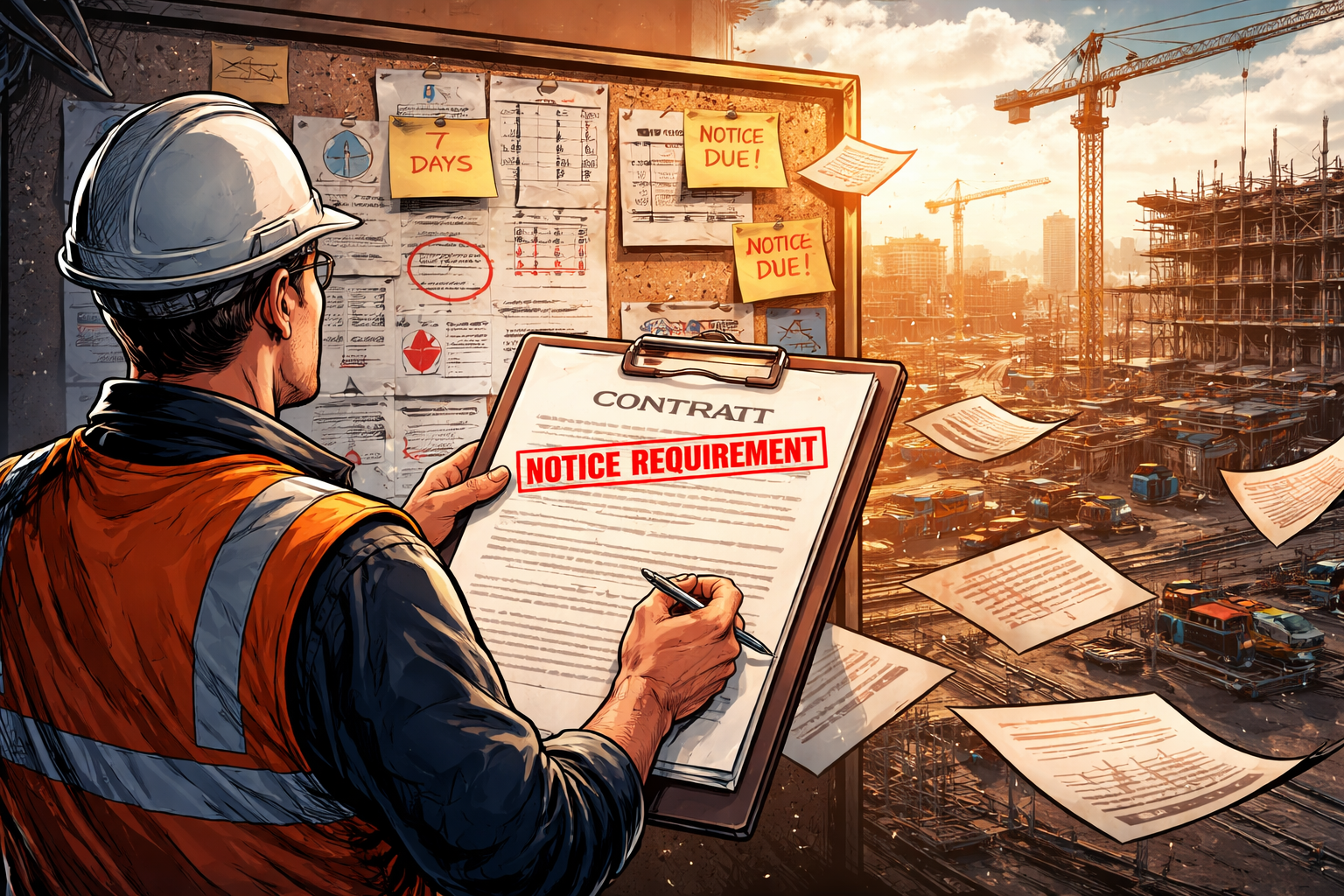
Notice Provisions: The Contract Requirement That Wins (and Loses) Construction Claims
Notice provisions are one of the most straightforward requirements in a construction contract, and one of the most commonly missed. When they're missed, the consequences are real: weakened claims, reduced recoveries, and unnecessary disputes.
My latest article in The Construction Counsel breaks down how notice provisions actually work when disputes arise, what happens when deadlines are missed, and how to build a compliance process that keeps your team from ever being in that position.

Key Person Provisions: Because People, Not Companies, Build Projects
People build construction projects. My latest piece in The Construction Counsel breaks down keyman provisions: what they are, why they're dramatically underused, and how a well-drafted clause can prevent the most common staffing problem in the industry.
Flowdown Provisions: How One Bad Clause Can Sink a Subcontractor
Most subcontractors never read the one clause that can hurt them the most. It's usually two sentences long and says you're bound by the prime contract. The problem? That prime contract is full of risk you never priced (or maybe even never read). I wrote about what to watch for and what to do about it.

Kentucky Construction Lawyer’s Guide to Mechanic’s Liens on Kentucky Projects (2026)
Kentucky courts require strict compliance with every step of the mechanic's lien process. This guide covers prelien notice deadlines, filing requirements, and enforcement timelines for commercial construction projects on private property.

Before You Sign: The 5 Subcontract Clauses Worth Reading Twice
Most subcontracts run 30 to 40 pages. Some are longer. When one lands on your desk two days before mobilization, it can be hard to get through it in detail. But whether or not you have time to read every page, these are the five clauses worth understanding before you sign.

How Technology Is Changing Construction Contract Review
The traditional contract review process is familiar to most contractors. A subcontract gets sent to outside counsel. Days pass. A redline comes back with dozens of changes and a bill measured in hours. Sometimes the comments are helpful. Sometimes they raise more questions than they answer. And sometimes the marked-up contract arrives after the subcontract has already been signed to keep the project moving.
This process has frustrated contractors for decades. It is starting to change.
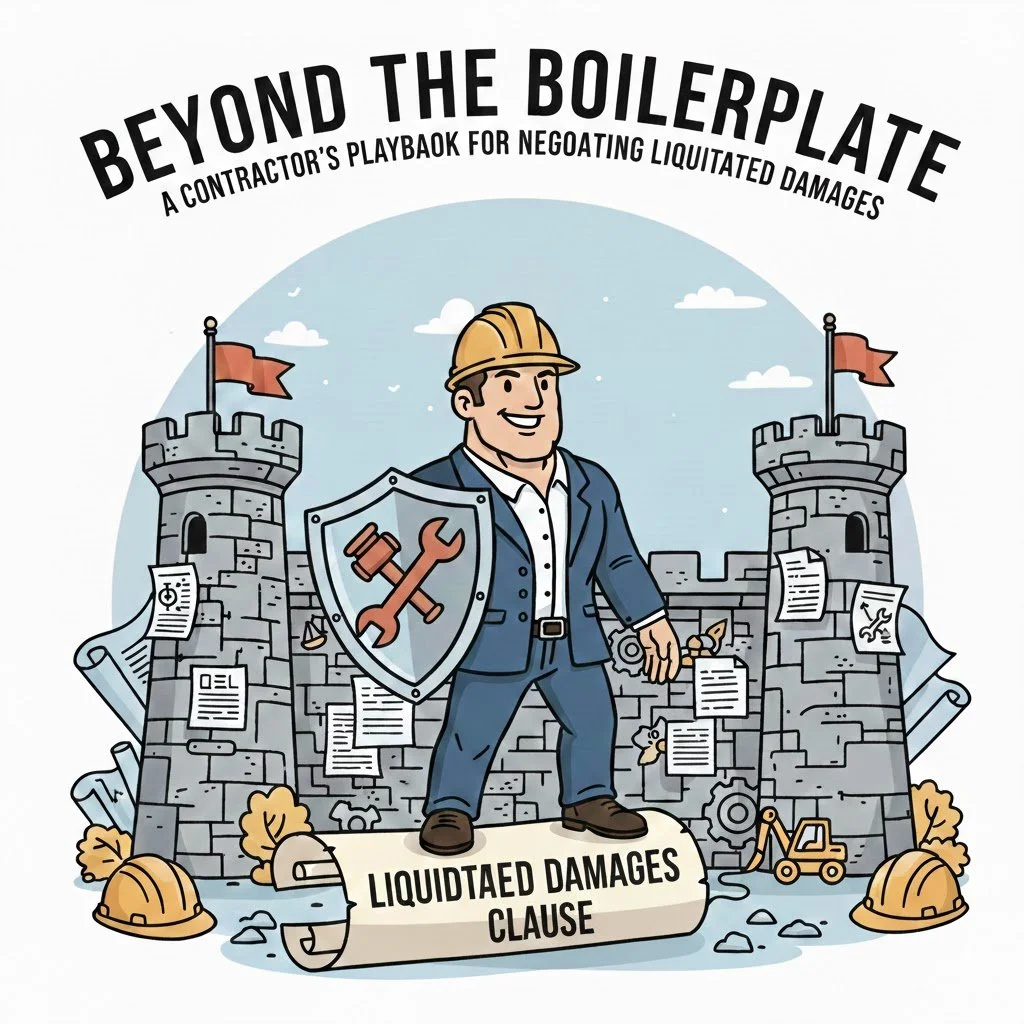
Beyond the Boilerplate: A Contractor's Playbook for Negotiating Liquidated Damages
Liquidated damages show up in almost every construction contract, yet they remain one of the most misunderstood terms in the deal. Too often they are either accepted without analysis or rejected on instinct. Neither approach serves the contractor's interest. This article breaks down how contractors and trade partners should evaluate, negotiate, and price liquidated damages as a business risk, not just a legal clause.

How Good Contracts Protect Relationships, Not Just Projects
Most disputes in construction do not start with bad people doing bad things. They start with misunderstandings. A well-drafted contract does more than create legal protection. It keeps the parties aligned, reduces friction, and provides a defined process for working through disagreements without damaging the relationship.

Understanding Indemnity Clauses in Construction Contracts
Indemnity is one of the most consequential provisions in a construction contract and one of the most commonly misunderstood. What starts as a simple obligation to cover a contractor's own mistakes can become language that pushes uninsurable risk down the chain. Here is what contractors need to evaluate before signing.

Profit in the Fine Print: Five Clauses That Pay Off
Most contractors treat contracts as risk documents. But the right provisions do more than protect against downside. They can strengthen margins, improve cash flow, and create revenue opportunities. Here are five clauses that consistently pay off when negotiated into the right projects.
From Reactive to Strategic: Bringing Legal Into Your Business Before It's Too Late
Many construction companies are growing fast but still treating legal like a fire extinguisher. The most successful contractors treat legal as a part of ongoing operations. Fractional general counsel fills the gap between occasional outside counsel and the overhead of a full-time hire.
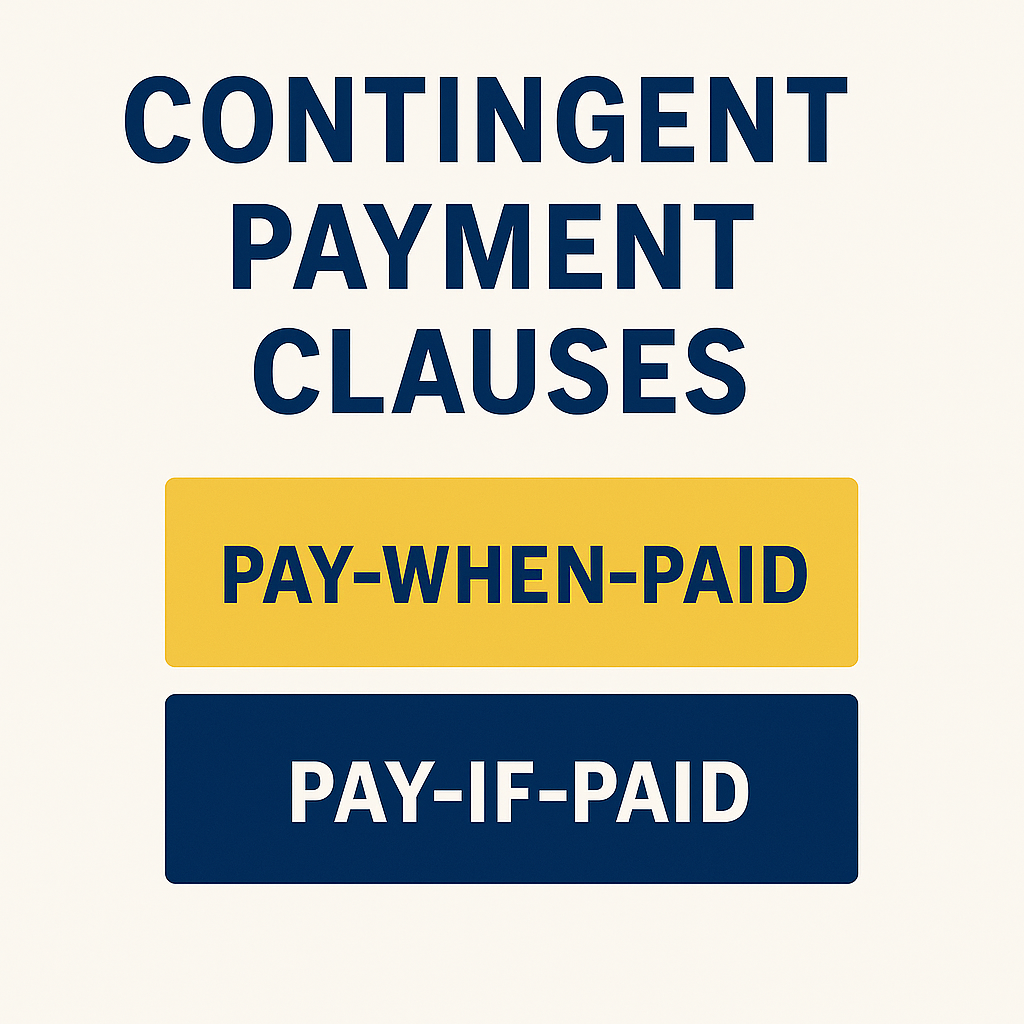
Contingent Payment Clauses: Pay-When-Paid, Pay-If-Paid, and What They Actually Mean
Not all contingent payment clauses work the same way. A pay-when-paid clause delays payment timing. A pay-if-paid clause can eliminate the payment obligation entirely. The difference between them is substantial, and it depends on both the contract language and the applicable state law.